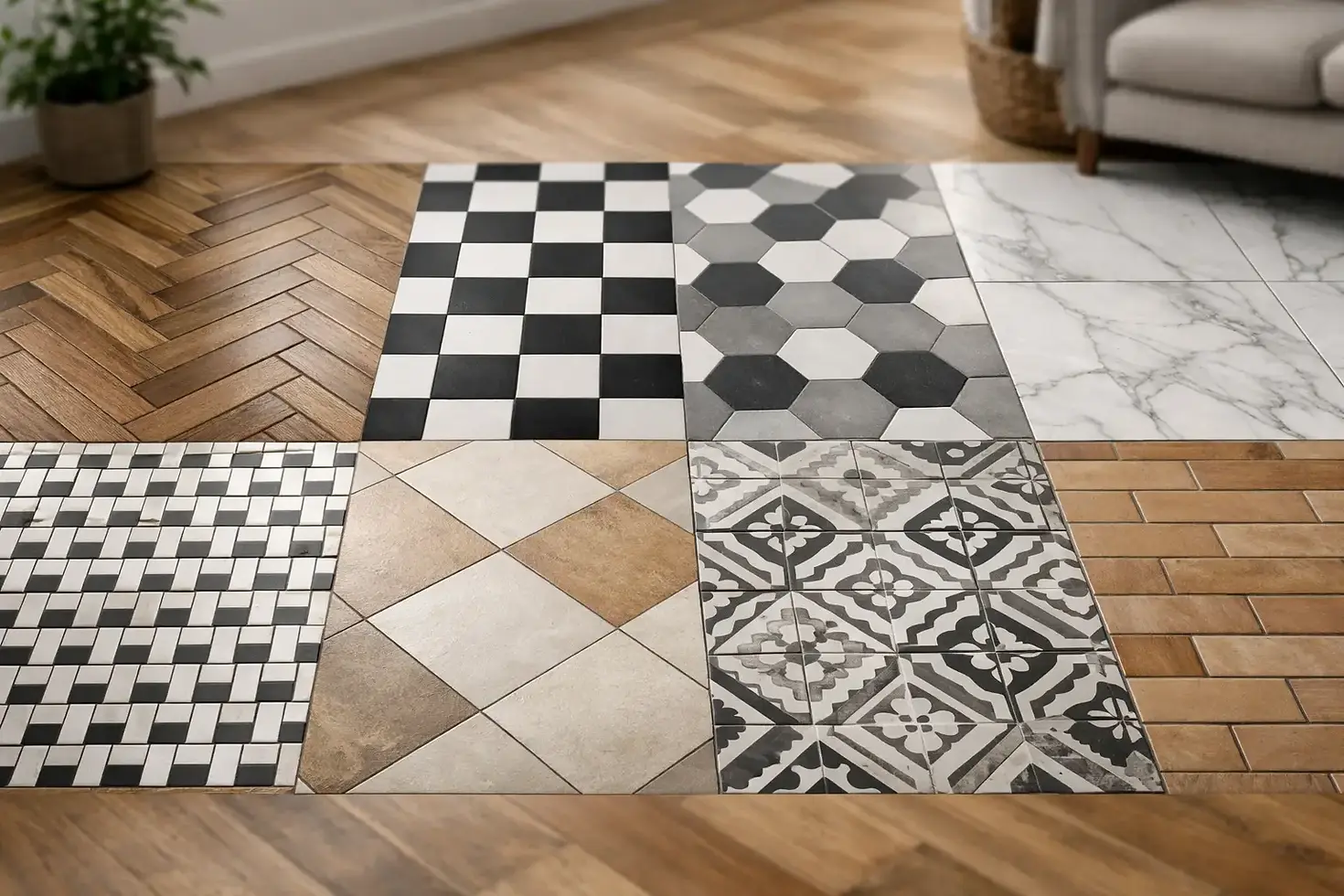
8 Tile Flooring Patterns for Home
- fastflooringdfw
- May 27
- 6 min read
A tile floor can look expensive, clean, and custom - or it can feel busy, dated, or out of place. The difference often comes down to layout. If you're comparing tile flooring patterns for home projects, the pattern matters almost as much as the tile itself because it changes how a room feels, how large it looks, and how much cutting and labor the installation will take.
For homeowners in Dallas-Fort Worth, that choice is rarely just about style. It is also about traffic, maintenance, budget, and how fast you want the job completed. A pattern that looks great in a showroom may not be the best fit for a narrow bathroom, an active kitchen, or a large open-concept living space. The goal is to choose a layout that works with your home, not against it.
How tile flooring patterns for home change the room
Tile pattern affects visual movement. A straight layout feels orderly and familiar. A diagonal layout can make a smaller room seem wider. A herringbone layout adds motion and detail, while a large-format stacked pattern can make a newer home feel clean and modern.
Pattern also affects cost and installation time. Some layouts create more waste because they require extra cuts around walls, cabinets, and transitions. Others are faster to install and easier to keep consistent across multiple rooms. If you are trying to balance appearance with timeline and budget, this is where practical guidance really helps.
Straight lay
Straight lay is the most common tile pattern for a reason. Tiles are installed in clean rows, with grout lines meeting at right angles. It works with square tile, rectangular tile, porcelain, ceramic, and natural stone, and it fits almost any design style.
This pattern is usually the most efficient to install, which can help control labor costs. It also gives the tile itself more attention, so if you have a tile with strong color variation, veining, or texture, straight lay lets that show without adding visual noise.
The trade-off is that it can feel plain if the tile choice is too basic or the room needs more character. In a simple laundry room or guest bath, that may be exactly what you want. In a main living area, some homeowners prefer a pattern with a little more movement.
Running bond or brick pattern
Running bond offsets each row, usually by half or by one-third of the tile length. It is commonly used with rectangular tile and works especially well when homeowners want a classic look that feels a bit softer than a grid.
This pattern is popular for wood-look tile because it mimics the staggered look of real planks. It also helps disguise minor size variation and can make a room feel more relaxed and lived-in.
There is one thing to watch. With some long plank tiles, a full 50 percent offset can highlight lippage if the tile has any natural bowing. In those cases, a one-third offset is often the better choice. That is a small technical detail, but it makes a real difference in how smooth the finished floor looks.
Diagonal lay
A diagonal pattern turns the tile at a 45-degree angle to the walls. That single change can make a basic tile look more custom. It is a smart option when a room feels narrow or boxy because the eye reads the space differently.
In smaller bathrooms, entryways, and kitchens, diagonal layouts can visually open the room. They break up the obvious lines of the walls and make the floor feel less confined.
The downside is that diagonal installations usually take more planning, more cuts, and more waste. That can raise labor and material costs. If you want a more elevated look without moving into a very decorative pattern, though, diagonal is often worth considering.
Herringbone
Herringbone has become one of the most requested tile flooring patterns for home updates, especially with wood-look porcelain planks. The pieces are set at 90-degree angles in a repeating zigzag, which gives the floor movement and texture without relying on bold colors or heavy contrast.
It works well in powder rooms, kitchens, mudrooms, and feature areas where you want the floor to stand out. In the right home, it can also look excellent in a larger living space.
This is not the budget pattern. Herringbone takes skill to lay out correctly, and the installation needs to stay consistent from the first row to the last. It also creates more cuts and requires careful planning at the perimeter. If speed and low labor cost are your top priorities, another pattern may make more sense. If you want a floor that feels custom and intentional, herringbone delivers.
Chevron
Chevron is often confused with herringbone, but the look is different. Instead of rectangular ends meeting at right angles, the tile ends are cut at an angle so the pattern creates a continuous V shape.
The result is cleaner and more formal than herringbone. It can look sharp in contemporary homes and high-end remodels, especially in long hallways or open areas where the pattern has room to show.
Chevron tends to cost more because it usually requires specialty tile or more precise cutting. It is a strong design choice, but not always the most practical one for every budget or every room. If you like the idea of movement but want something easier to install, herringbone or running bond may be the better fit.
Stacked layout
A stacked pattern lines tiles up directly on top of each other, creating clean vertical and horizontal lines. With large-format tile, this layout gives a crisp modern look that works well in newer homes and minimalist spaces.
The strength of stacked tile is simplicity. It feels organized and current, and it works especially well when the tile has a concrete look, stone look, or subtle texture. In open-concept spaces, it can create a calm backdrop that does not compete with cabinets, furniture, or wall color.
Because the lines are so clean, layout accuracy matters a lot. Any unevenness stands out. This is also a pattern that can emphasize a room's shape, so if the space is noticeably uneven or out of square, your installer has to plan carefully.
Versailles or modular pattern
A Versailles pattern uses multiple tile sizes arranged in a repeating layout. It is often used with travertine-look or stone-look tile and gives the floor a more traditional, old-world feel.
This pattern can work beautifully in larger homes, expansive kitchens, and first-floor living areas where you want visual richness. It also helps break up large stretches of flooring so the room feels layered rather than flat.
That said, it can overwhelm smaller rooms. It also takes more layout planning and can feel too busy if the tile itself already has a lot of variation. When it works, it looks custom. When it does not, it can make the space feel crowded.
Basket weave and other decorative patterns
Basket weave, pinwheel, and other decorative layouts are best used with intention. They can be excellent in smaller spaces like powder rooms, laundry rooms, or vintage-style bathrooms where a bit of pattern adds charm.
These layouts are less common in large main-floor installations because they can start to dominate the room. They also tend to fit specific design styles. If the rest of your home is clean and contemporary, a decorative pattern may feel disconnected unless the materials are chosen very carefully.
How to choose the right pattern for your home
Start with room size and shape. Small rooms often benefit from diagonal or simpler patterns that help the space feel open. Large open spaces can handle more visual detail, but the pattern should still support the overall style of the home.
Next, think about the tile type. Large-format tile usually looks best in straight or stacked layouts. Wood-look planks work well in running bond and herringbone. Natural stone or stone-look tile can suit modular patterns, but only if the room is large enough to carry the design.
Then consider maintenance and daily life. Busy households usually do best with patterns and grout choices that hide dirt, dust, and minor wear. Highly intricate layouts with lots of grout joints may look great, but they also create more lines to clean.
Finally, match the pattern to your timeline and budget. Straight lay and running bond are generally more efficient. Herringbone, chevron, and modular layouts take more time and precision. If you want fast results without giving up style, a well-chosen tile in a simpler pattern often gives the best value.
Why installation quality matters as much as the pattern
Even the best tile flooring patterns for home projects can fall flat if the layout is poorly planned. The starting point, the centering of the room, the transition into neighboring spaces, and the consistency of grout joints all matter. A pattern should look intentional from the doorway, not like it was adjusted on the fly.
This is especially true in Dallas-Fort Worth homes with open layouts where one flooring run may connect the kitchen, breakfast area, and living room. A rushed installation shows quickly in those spaces. Good planning helps the pattern flow naturally and keeps awkward cuts out of the most visible areas.
That is why many homeowners want more than a product list. They want someone to walk the space, explain what will look right, and recommend a pattern that fits the room, the material, and the installation timeline. At Fast Flooring DFW, that practical guidance is a big part of getting the floor right the first time.
The best tile pattern is not always the fanciest one. It is the one that fits your space, your budget, and the way your home actually works day to day. When those pieces line up, the floor does more than look good - it feels like it belongs there.


Comments