Waterproof Laminate Flooring Review
If you have kids, pets, or a kitchen that sees real traffic, a waterproof laminate flooring review matters a lot more than a showroom display. On the sample board, most laminate looks great. The real question is what happens after spilled water, wet shoes, dog bowls, and everyday use start testing the floor.
Waterproof laminate has improved quite a bit over the last several years. It is no longer just the budget option people settle for when they want the look of wood without the price of hardwood. In many homes, it is a practical middle-ground choice that gives you a wood-look surface, solid scratch resistance, and better moisture protection than older laminate products ever offered. Still, "waterproof" does not mean "indestructible," and that is where many buyers get disappointed.
Waterproof laminate flooring review: what it does well
The biggest strength of waterproof laminate is that it solves one of traditional laminate's biggest weaknesses. Older laminate products could swell quickly if moisture got into the seams or core. Newer waterproof laminate lines are built with tighter locking systems, water-resistant coatings, and more stable cores designed to buy you time when spills happen.
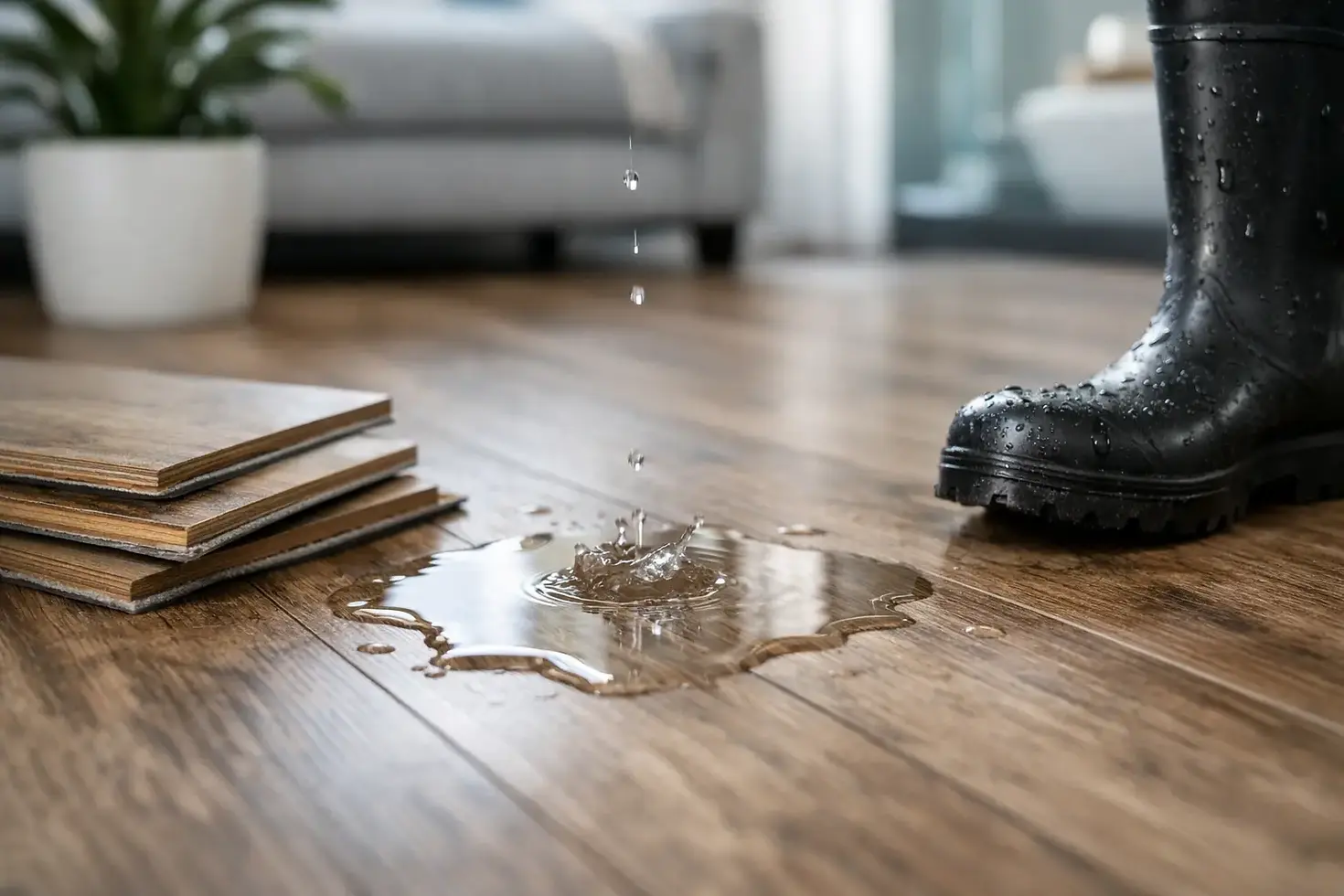
That last part matters. In real-world terms, waterproof laminate is usually designed to handle surface moisture and everyday accidents if they are cleaned up within the manufacturer's stated window. For many households, that is enough. A spilled drink in the living room, splashes near the dishwasher, or wet footprints from the backyard are not necessarily a crisis.
It also performs well when you want a harder-feeling floor underfoot than luxury vinyl. Some homeowners prefer laminate because it often has a more realistic wood texture and a firmer, more substantial feel. The visual layer has come a long way too. Better products now offer wider planks, matte finishes, and embossed textures that look more natural than the shiny laminates many people remember from years ago.
Another plus is scratch resistance. If you have active kids moving chairs, toy bins, and backpacks across the floor, laminate often holds up very well. The wear layer on quality laminate can be a strong fit for busy households that want a floor that stays presentable without constant worry.
Where waterproof laminate still has limits
This is the part every honest waterproof laminate flooring review should cover. Waterproof laminate is water-resistant for a period of time, but it is not the same thing as a floor that can sit in standing water indefinitely.
If a washing machine leaks overnight, a refrigerator line fails, or floodwater enters the home, laminate can still be damaged. The top may resist moisture better than older products, but water can find its way into edges, underlayment, or subfloor areas if exposure is long enough. Once the core is compromised, swelling and joint failure can follow.
That is why room choice matters. Waterproof laminate can be a smart option for living rooms, bedrooms, hallways, home offices, and many kitchens. Bathrooms, laundry rooms, and any area with frequent standing water are more situational. Some products are rated for those spaces, but the installation quality has to be right, and the household has to be realistic about risk.
It is also worth mentioning sound and feel. Laminate is harder underfoot than carpet or some vinyl floors. That can be a positive if you like a more solid walking surface, but it can also mean more footfall noise if the underlayment and installation are not handled properly.
What to look for before you buy
Not all waterproof laminate is built the same. The label on the box is only the starting point.
First, check the water warranty details. Manufacturers use different language, and those details matter. Some products cover topical spills for a certain number of hours. Others market themselves as waterproof but include very specific installation requirements around perimeter sealing, transitions, or moisture barriers. If those steps are skipped, the warranty may not help much.
Second, pay attention to thickness and overall construction. A thicker board often feels more stable and can help the floor sound and feel better once installed. It is not the only quality marker, but thin, bargain-level products usually reveal their limits faster.
Third, look at the locking system. A strong click-lock profile helps boards fit tightly and resist moisture intrusion at the seams. Cheap locking systems can chip during installation or fail to hold a clean connection over time.
Fourth, consider the texture and finish. A floor can be technically durable and still look flat or artificial. In most homes, the best value comes from choosing a product that balances performance with a realistic visual. If you are replacing flooring throughout the main areas of the house, appearance matters every single day.
Waterproof laminate vs. luxury vinyl plank
This is where many homeowners pause, and for good reason. If moisture protection is your top concern, luxury vinyl plank often has the edge because the material itself is less vulnerable to water damage. In bathrooms, laundry rooms, and homes where spills are constant, vinyl may be the safer play.
So why choose waterproof laminate at all? Usually it comes down to look, feel, and price positioning. Many people prefer the visual depth and surface texture of laminate. It can feel more like a traditional hard-surface floor and less flexible underfoot than some floating vinyl products. Depending on the product line, laminate can also be competitively priced for larger installations.
The right answer depends on how you live. If you want better protection from bigger moisture events, lean toward vinyl. If you want strong scratch resistance, a convincing wood look, and enough water protection for normal household messes, waterproof laminate deserves a serious look.
Best rooms for waterproof laminate flooring
In most homes, waterproof laminate makes the most sense in common living areas where style and durability both matter. Family rooms, dining rooms, hallways, and bedrooms are easy fits. These spaces benefit from the scratch resistance and wood-look appearance without exposing the floor to the highest possible moisture risk.
Kitchens are often a yes, but with a condition. The floor needs to be installed correctly, and spills need to be cleaned up in a reasonable amount of time. For many families, that is no problem. For others, especially homes with frequent appliance leaks or heavy water use, another material may offer more peace of mind.
Bathrooms are more of a case-by-case decision. A powder bath is one thing. A full bathroom used by kids is another. The more standing water you expect, the more careful you should be.
Installation matters more than most people think
A good product can still fail if the installation is rushed. Subfloor prep, expansion spacing, transition details, and edge protection all affect how waterproof laminate performs over time.
Uneven subfloors can stress the locking system. Poor cuts around cabinets or walls can leave vulnerable gaps. The wrong underlayment can affect sound, stability, and manufacturer compliance. These are not small details. They directly impact how the floor looks, feels, and holds up.
This is one reason many homeowners prefer working with a local flooring company that handles both selection and installation. Getting the right product is only half the job. The other half is making sure it is installed in a way that supports the warranty and fits the room conditions.
Is waterproof laminate worth it?
For a lot of homeowners, yes. If you want a wood-look floor with solid scratch resistance, better moisture protection than old-school laminate, and a price point that can be easier on the budget than some premium alternatives, waterproof laminate can be a strong value.
But it is worth it only if your expectations are realistic. It is a great option for busy homes, not a miracle product. It handles everyday life well when you choose the right line, put it in the right rooms, and have it installed properly.
If you are comparing flooring for a home in the DFW area, the best next step is usually not staring at more online product photos. It is getting samples in the room, looking at the light, talking through your traffic levels, and matching the floor to the way your household actually lives. The right floor should make your day easier, not give you one more thing to worry about.


Comments