What Is Carpet Face Weight?
You are standing in a carpet showroom, looking at two samples that seem almost identical, and one tag says 40 oz. while the other says 60 oz. If you are wondering what is carpet face weight, you are asking one of the right questions - but not the only one. Face weight can tell you something useful about carpet quality, comfort, and density, but it does not tell the whole story by itself.
For homeowners trying to make a smart flooring decision, that distinction matters. A higher number can sound better, but the best carpet for your home depends on where it is going, how much traffic it will handle, what fiber it uses, and how it is constructed. Face weight is one piece of the puzzle, not the final answer.
What is carpet face weight?
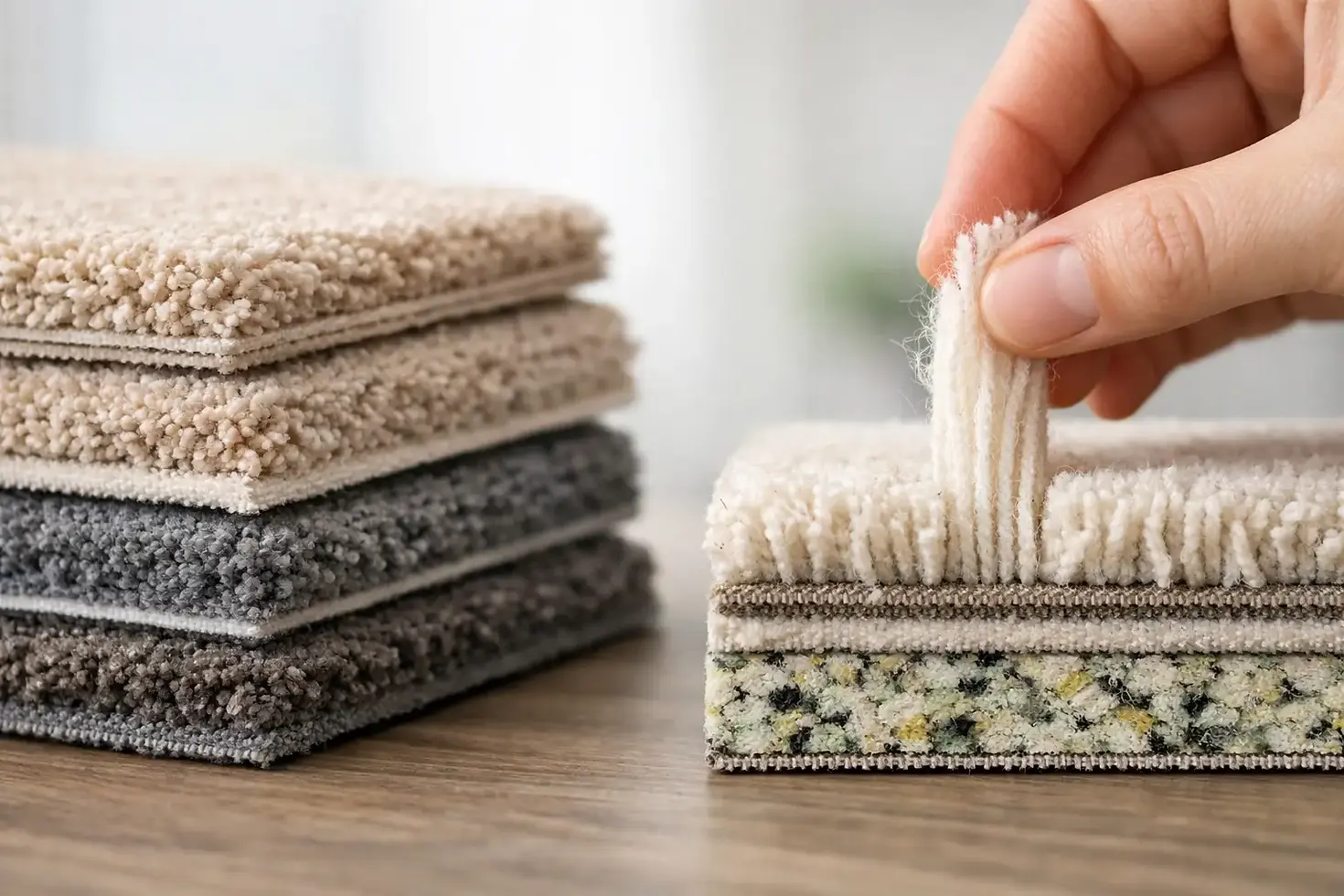
Carpet face weight is the amount of carpet fiber on the surface of the carpet, measured in ounces per square yard. In simple terms, it tells you how much yarn is used to make the visible part you walk on.
That surface fiber does not include the backing, padding, or total carpet weight. It is only measuring the pile yarn. So when you see a carpet labeled 40-ounce face weight, that means one square yard of the carpet contains 40 ounces of face fiber.
For homeowners, the practical takeaway is pretty straightforward. More face fiber often means a fuller feel underfoot and, in many cases, better wear performance. But the word often is doing a lot of work there. A heavier carpet is not automatically a better carpet.
Why carpet face weight matters
Face weight matters because it can help you compare how substantial one carpet may feel and perform versus another. Generally, carpets with higher face weights have more fiber packed into the surface, which can improve comfort and help the carpet hold its appearance longer.
That is especially relevant in busy areas like hallways, stairs, family rooms, and bedrooms that get daily use. In those spaces, a carpet with too little fiber may flatten faster or show traffic patterns sooner.
Still, this is where many shoppers get tripped up. Face weight is helpful for comparing carpets that are similar in style and fiber type. If you compare totally different constructions, the number can be misleading. A high-face-weight shag and a lower-face-weight dense loop carpet are not built to perform the same way.
What is a good carpet face weight?
A good carpet face weight depends on the room and the carpet style, but there are some general ranges that homeowners can use as a starting point.
For many residential spaces, carpet in the 35 to 50 ounce range is considered a solid middle ground. It can provide a comfortable feel and dependable performance when paired with good construction. If you are shopping for a more premium carpet, you may see face weights from 50 to 70 ounces or more.
Lower face weights, such as 25 to 35 ounces, may work fine in lower-traffic rooms or for more budget-conscious projects. They are not always poor quality, but they usually will not feel as plush or wear as well in active parts of the home.
That said, there is a point where chasing the highest number stops being practical. A carpet with very high face weight may feel luxurious, but if it is going into a guest room, you may be paying for performance you do not really need. On the other hand, saving money on a lower face weight in a busy hallway can cost you in appearance over time.
Face weight vs. density - what is the difference?
This is where a lot of the real quality discussion starts. Face weight tells you how much fiber there is. Density tells you how tightly that fiber is packed together.
A carpet can have a high face weight because it has long, loose fibers. That may feel soft at first, but if the yarn is not packed tightly enough, it can crush down more easily. Another carpet may have a slightly lower face weight but much better density, which can make it perform better in high-traffic areas.
Think of it like this: face weight is not just about how much fiber exists, but density helps explain how that fiber is arranged. When carpet fibers are packed closer together, they are often better at resisting matting and wear.
For homeowners, this means you should not judge a carpet by face weight alone. If two options have similar face weights, the denser one may be the better long-term choice.
Fiber type matters just as much
The type of carpet fiber plays a major role in how face weight translates to real-world performance. Nylon, polyester, triexta, and olefin all behave differently.
Nylon is often considered one of the most durable residential carpet fibers, especially in high-traffic spaces. A nylon carpet with a moderate face weight may outperform a heavier polyester carpet in a busy home. Polyester can offer great color and softness at a good value, but performance varies depending on the product and traffic level.
That is why comparing face weight across different fiber types can get tricky. A 45-ounce nylon carpet and a 45-ounce polyester carpet may not wear the same way at all. The number is the same, but the fiber properties are different.
Carpet style changes the comparison
Carpet style also affects how useful face weight is. Cut pile, textured plush, frieze, loop, and patterned carpets are built differently, so the same face weight will not always create the same feel or durability.
For example, a frieze carpet with twisted fibers may do a good job hiding footprints and traffic patterns even if its face weight is not the highest in the showroom. A loop carpet may feel firmer and wear well because of its construction, not just because of its ounce rating.
This is why apples-to-apples comparisons matter. Face weight is most helpful when you compare carpets with similar fiber, similar style, and similar intended use.
How to use face weight when shopping for carpet
The best way to use face weight is as a filter, not a final decision-maker. It can help you eliminate options that may be too light for your needs, but it should be considered alongside density, fiber type, twist level, warranty, and how the carpet feels in person.
If you are carpeting a primary bedroom, you might prioritize softness and comfort, with moderate durability. If you are replacing carpet in a hallway, on stairs, or in a family room with kids and pets, performance should move up the list. In those cases, a decent face weight paired with strong density and durable fiber is usually a smarter choice than simply buying the softest sample.
It also helps to be honest about your household. A low-traffic guest room and a busy home with pets are not shopping for the same carpet, even if they start with the same color preference.
Common misunderstandings about carpet face weight
One common mistake is assuming face weight equals total carpet weight. It does not. The backing and other parts of the carpet are excluded from that number.
Another mistake is assuming the highest face weight is always the best value. Sometimes it is, but sometimes you are just paying for extra plushness in a room that does not need it. Or worse, you are looking at a heavy carpet with weaker overall construction.
A third misunderstanding is treating face weight as a universal rating across all carpets. It really works best as a comparison tool within similar categories. Without context, the number can oversimplify a product that should be judged on several performance factors.
So, what should homeowners focus on?
If you are buying carpet for your home, face weight deserves attention, but it should not carry the whole decision. A better approach is to ask how the carpet is going to live in your space. Will it see heavy foot traffic? Do you want a soft bedroom feel or tougher everyday performance? Is this a budget-driven update or a long-term investment?
That is where practical guidance makes a difference. An experienced flooring professional can help you compare samples that actually fit your room, budget, and wear expectations instead of just pointing to the biggest number on the tag. At Fast Flooring DFW, that kind of side-by-side guidance is often what helps homeowners narrow the field quickly and avoid costly guesswork.
If you remember one thing, make it this: face weight is useful, but context is everything. The right carpet is not the one with the most ounces. It is the one that fits the way your home really works.


Comments