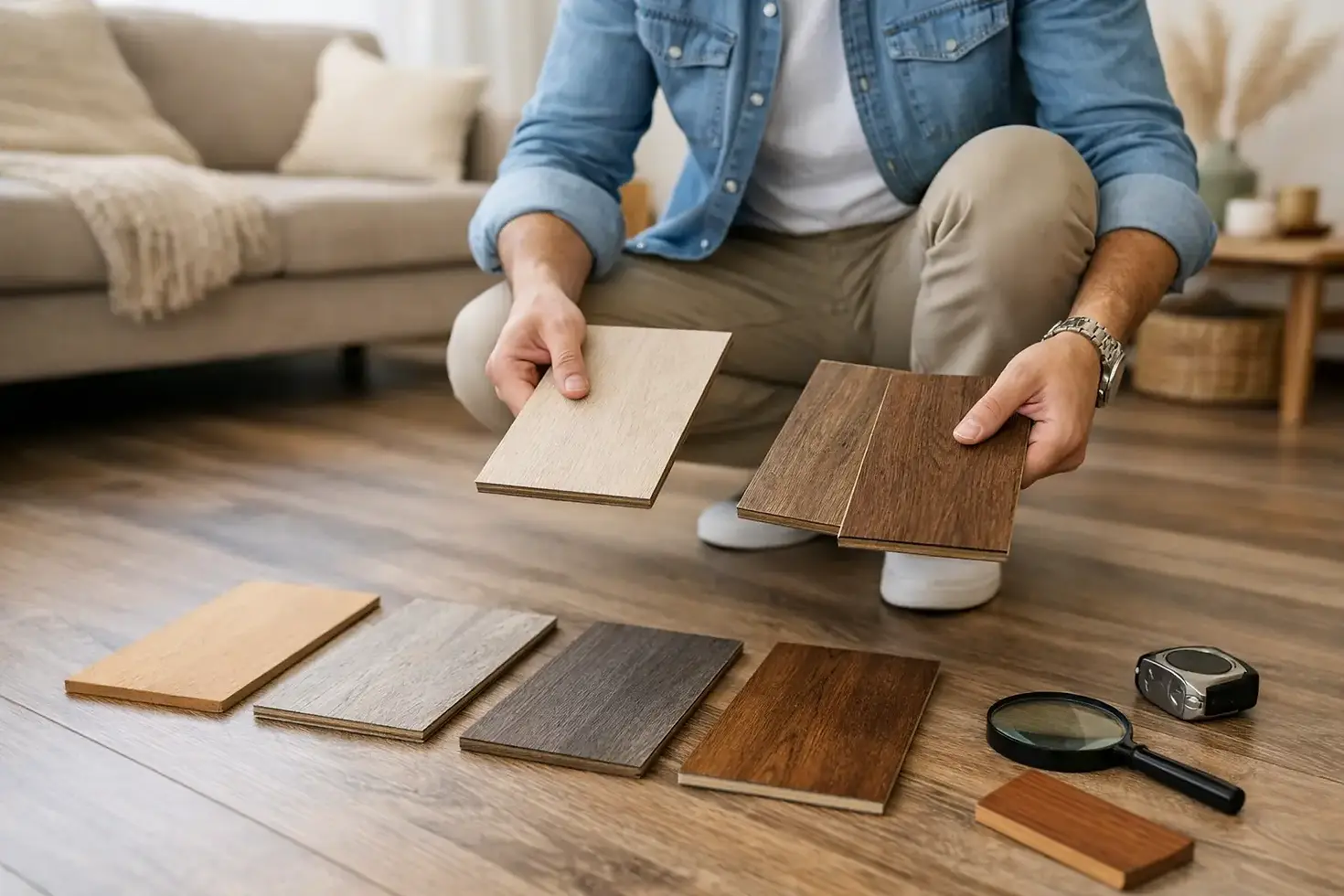
How to Compare Flooring Samples in Your Home
A flooring sample that looks like the perfect warm oak in a showroom can look gray in a north-facing bedroom, orange beside existing cabinets, or far busier than expected across an entire room. Knowing how to compare flooring samples at home prevents that expensive surprise. The goal is not to find the sample that looks best in your hand. It is to find the floor that works with your light, furniture, traffic, and daily routine.
Start With the Room, Not the Sample
Before putting samples side by side, take a practical look at the room they are meant for. Flooring is a large, permanent visual surface, so the existing elements around it matter more than a showroom display.
Look at wall color, cabinet finish, countertops, brick, fireplace stone, window treatments, and the furniture you plan to keep. A floor does not need to match these features exactly. In fact, matching wood tones too closely can make a room feel flat. What you want is an intentional relationship between undertones.
For example, a floor with strong golden or red undertones may fight with gray cabinets or cool-toned marble. A gray floor may look clean next to white cabinetry but cold beside cream walls and warm beige upholstery. Hold each sample directly next to the finishes that are staying. This gives you a more useful answer than comparing flooring samples only against each other.
Also think about the room's job. The right look for a quiet guest bedroom may not be the right choice for a busy kitchen, entryway, or living room with kids and pets. Your favorite color is only one part of the decision.
How to Compare Flooring Samples in Real Light
Light changes flooring more than most homeowners expect. Bring samples home and look at them in the actual room at several times of day: morning, midafternoon, evening, and with your usual interior lights on.
Dallas-Fort Worth homes often get strong natural sunlight, especially in rooms with large south- or west-facing windows. That light can pull out warm tones and make a pale floor appear brighter. A darker sample may look rich and dramatic in the morning, then show more dust, pet hair, and footprints when afternoon sun hits it.
Do not leave samples flat on a countertop alone. Place them on the floor where the new flooring will be installed. Then stand up and view them from normal walking distance. Flooring is usually seen from five or six feet away, at an angle, not from a few inches above.
If possible, move the sample around the room. A sample near a window may look completely different from the same sample in a shaded hallway. This is especially helpful when choosing luxury vinyl, laminate, or hardwood-look products with visible color variation.
Check Your Light Bulbs, Too
Warm bulbs can make beige, honey, and brown floors appear more yellow. Cool white bulbs can make the same products look grayer. If you are planning to change your light fixtures or bulb temperature during the renovation, compare samples under the lighting you expect to use after the project is complete.
This small step can keep a floor from feeling like the wrong color once the installation is done.
Compare Larger Pieces Whenever Possible
A small swatch is useful for narrowing choices, but it cannot show the full character of a flooring product. Grain pattern, plank length, texture, bevels, and color variation become much more noticeable over a larger area.
Ask to see the largest sample available, especially for wood-look flooring and patterned tile. With a plank product, place several pieces together if you can. One board may look calm and uniform, while three or four boards reveal dramatic knots, mineral streaks, or repeating printed patterns.
This matters with luxury vinyl plank and laminate. These products are designed with repeated visual images. Higher-quality options typically offer more variation, but every product has a repeat. Looking at multiple planks helps you decide whether the pattern feels natural in a larger space.
For carpet, use the sample to check both color and texture. Run your hand across it, brush the fibers in different directions, and step on it. A carpet can look lighter or darker depending on the direction of the pile. If you are comparing two similar options, face weight and construction can be more meaningful than appearance alone.
Judge Color, Texture, and Sheen Separately
It is easy to reject a sample because something feels off without knowing why. Break the comparison into three simple categories: color, texture, and sheen.
Color includes both the overall shade and the undertone. Is the floor light, medium, or dark? Does it lean warm, cool, or neutral? A neutral floor is often a flexible choice, but “neutral” still varies. Some neutrals lean taupe, some lean gray, and some lean golden brown.
Texture affects both appearance and maintenance. Wire-brushed, embossed, hand-scraped, and textured surfaces can hide everyday wear well, but deep texture may hold onto dirt in a busy entry or kitchen. Smooth surfaces are easier to wipe down, though scratches and scuffs may be more visible depending on the color and finish.
Sheen is the amount of reflected light. Glossy flooring can look polished but tends to highlight scratches, footprints, and uneven subfloor conditions. Matte and low-sheen finishes are popular because they create a more relaxed look and generally hide daily marks better. There is no universal best choice. It depends on how formal you want the room to feel and how much maintenance you want to notice.
Test Samples Against Everyday Life
A good sample comparison includes a few honest questions about your household. If you have a large dog, do not select a very dark, high-gloss floor without considering how often you will see hair and paw prints. If you have children, think about spills, dropped toys, and the traffic path from the door to the kitchen.
For each sample, ask how it handles moisture, scratches, dents, and cleaning. Product construction matters here. Luxury vinyl is often a practical fit for homes that want water-resistant performance and easy cleaning. Laminate can offer a durable wood look, but water protection varies by product. Hardwood brings natural character and can be refinished in some cases, yet it requires more care around moisture and heavy impacts. Tile is highly durable and water-resistant, though it is harder and cooler underfoot. Carpet provides comfort and sound control, but the right fiber and face weight matter in high-use rooms.
Do not assume a thicker plank automatically means a tougher floor. For luxury vinyl, the wear layer is a major indicator of surface durability. For carpet, face weight and fiber type are key details. For any product, ask for a clear explanation of what the warranty covers and what it does not.
Compare Samples With Your Budget and Installation Plan
The lowest product price is not always the lowest project cost. Flooring installation may also involve removing existing flooring, preparing the subfloor, moving furniture, installing transitions, and replacing or reinstalling baseboards or shoe molding. A sample may be beautiful, but it needs to fit the complete scope of the project.
This is particularly important when comparing flooring heights. A thicker tile, hardwood, or carpet selection may change how the new floor meets existing rooms, exterior doors, cabinets, or stairs. Transitions can solve many of these issues, but they should be planned rather than treated as an afterthought.
When comparing two products that look similar, ask what you gain by spending more. You may be paying for a thicker wear layer, better visual variation, improved water resistance, a stronger locking system, a longer warranty, or a more realistic texture. Sometimes that upgrade is worthwhile. Other times, a dependable mid-range product is the smarter choice for a bedroom, rental property, or short-term refresh.
Narrow Your Choices Before the In-Home Estimate
Try to narrow your selection to two or three strong contenders. Too many samples make the decision harder, especially once subtle differences begin to blur together. Take a quick photo of each option beside cabinets, walls, and furniture, but trust what you see in person more than what appears on a phone screen.
Write down what you like and what gives you pause. One sample may have the best color but feel too slick. Another may be slightly darker than planned but better for hiding everyday traffic. Those notes give you a much clearer conversation with a flooring professional.
An in-home estimate is also the right time to confirm square footage, subfloor needs, material quantities, transitions, and installation timing. Fast Flooring DFW can help homeowners compare products in the space where they will actually live with them, then turn that choice into a clear installation plan.
The best flooring sample is the one that still looks right after the sun moves, the lights come on, the dog walks through, and the room is being used the way your family really uses it.


Comments